
-
DevSecCon
It was an absolute pleasure to join Waleed to present the refreshed Identity at Code to DevSecCon London. The recording is available on YouTube below
Presenting: Identity as Code
Abstract: Users now have more complex identities than ever before; federated accounts, second-factor authentication, and multiple devices all these conditions need to be tested, but how? This talk will examine the minefield of identity and authentication in your pipeline and how your team can traverse this to ensure that you are managing identity as an architectural component without resorting to manual steps.
-
IDC Future of work
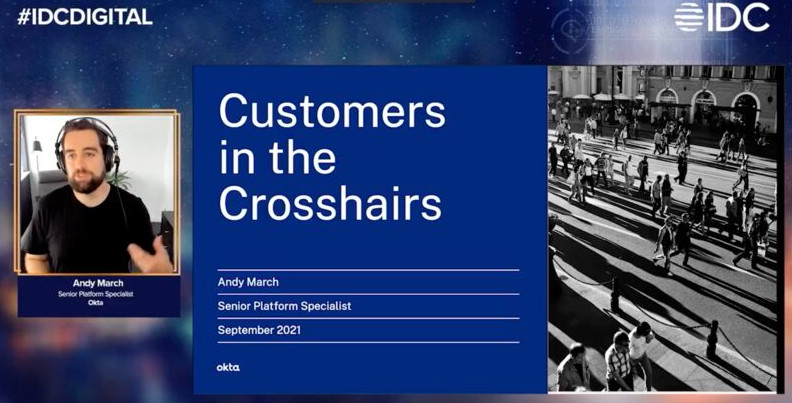
Presenting: Customers in the Crosshairs
Abstract: As users now expect more from the organisations they interact with online managing the identity of your customers is becoming much more complex. Password dumps, multiple devices and poor MFA adoption put pressure on security and development teams. All the time your competition is waiting in the wings to offer an alternative if your offering doesn’t meet the customer’s expectations.
Join Andy in a session where he discusses the threats to your customers, the impact those threats can have on your organisation and how to build a customer identity which not only protects your customers but provides a better user experience.
-
Paternity & Working Four Day Weeks
There has been a lot of articles recently on how the pandemic has changed our working habits; flexi-work, dynamic-work, remote-first, new-normal choose your descriptor. I think that we are going to fundamentally change how knowledge workers view going to work. Many people have proposed that our changing work environment means should reevaluate if the expected five-day working week is still successful or if our new flexibility should even include changing the days we work. Studies have tried to quantify the impact that a four-day working week has on productivity and society at large. I’m not qualified to weigh in on that but have worked fully remote four days a week for the last year and this is what I’ve learnt.
In September last year, my wife and I welcomed our second daughter into the world. I’m very fortunate to work for an organisation with an incredible parental leave policy and we’re given 18 weeks to spend with our new baby. Reading the policy I saw that this didn’t need to be taken in one block but could actually be spread throughout the year after their birth. So with my manager’s and the people team’s blessing, I shifted my working week to Monday to Thursday. My role is customer-facing so I’m working both with our internal teams as well as our customers which meant that I ended up explaining why I was not going to be available a lot. In a nice sping one of our managers stopped referring to me being unavailable as paternity leave but simply as “Andy does family Fridays”. It was perfect, people understood that I would not be available and I got out of the curious conversation of why my paternity leave was one day.
Now as Scott Hanselman has pointed out that quarantine work !== remote work there are very different pressures and priorities on someone working remotely than someone working remotely during the pandemic. In much the same way the first part of my four-day week year was a blur of sleepless nights, midday nap breaks, and kid’s activities. How you use that extra day available to you will massively impact how you perceive a four-day week. Do you have a project to do? Somewhere to go? As we crept out of lockdown and my daughter was able to do more we’ve been using our Fridays as a chance to do family trips to the zoo and the beach. These days have been a great chance to squeeze extra things in that we have been unable to do over the last year and a half.
Lessons Learnt
Being an individual contributor shifting my working pattern had an impact on the teams and customers I interacted with. The following points are patterns I’ve tried to apply with mixed success throughout the year.
Communicate
Set expectations and stick to them. Tell people when you are and are not going to be available. I think above all else this is the most important take away from this year and being remote in general, over-communicate. By making sure that the people I’m working with have a clear understanding of what they can expect from me and when has made the entire process infinitely easier. There is nothing worse than waiting for an action from someone and when it does arrive it is not what you needed.
When you are gone be gone
This one I struggled with, email, Slack, mobile phone it’s far too easy to be sucked back into work when you’re interested in what is going on. We run GSuite so I found that email push was an immense distraction on Fridays or evenings. Sadly on Android, there is no way to set a push notification policy for just my work account. However, I did find Quiet for Gmail which will enable/disable the synchronization on a custom schedule and this has been revolutionary for me. I made a few exceptions to this rule when there was something that needed to happen on a Friday I made sure that I could attend. After all, it is flexible working, that flexibility goes both ways.
Asynchronous Tooling
Being on a different schedule to both the rest of the teams I work with and my customers means that I often missed things that happened at set times when I was not working. Tooling is coming to the fore here but it needs to be lead by organisations that adopt it and make space for it in their work. Scheduled broadcast meetings were a big one for me, there are a bunch of calls that happen every Friday, while I didn’t make a single one of these synchronously in the last year I read each agenda and watched each part that might be relevant on the shared recording. I never felt I missed any of the content and was able to follow up with people as easily if I’d attended synchronously. Drawing the line between tasks which need everyone to be in the same place at the same time to collaborate and those that which do not is vital. Once you know if you need everyone at once or not you can pick the best tool for the job. The examples below I’ve borrowed from a presentation given internally by Kate Lister on the future of dynamic work:
Synchronous tasks: 1 to 1s, complex problem solving, sensitive conversations, social events. Synchronous communication channels: video conference, telephone, instant messaging
Asynchronous tasks: 1 to many, announcements, status updates, collaborative writing. Asynchronous communication channels: email, recorded meetings, collaborative documents
Pre-planning
Reducing my available working time by a fifth means I spent fewer total hours dedicated to work but it didn’t mean my output had to drop by the same amount. One of the things I was most careful of was pre-planning my time to prioritize the things that mattered most. What does tomorrow look like? What are the targets for the week? Next week? Having a clear picture of what time I had available and setting clear goals and time boxes to achieve them was invaluable. This clear plan of what I’m working on is available in my shared calendar, anyone I was working with could easily grab free slots with me. If something came up last minute that required immediate action a quick shuffle of those blocks of time made room to accommodate last-minute tasks.
Moving back to the five day week
As my daughter turns one I’ll return to the five-day working week, will I miss my family Fridays? Absolutely. I’m very lucky to have been able to spend so much extra time with my family this year. Having the flexibility to spread my paternity leave through the year meant I was able to strike a better work life balance and enjoy both sides all the more. Four-day weeks have changed how I view work. Moving more tasks towards asynchronous behaviour and better pre-planning allowed me to make better choices about what is important to do with the time I had available and what impact I want to have. Neither of these actions require the drastic change of moving to a four day working week and are without doubt the biggest force multiplier I have yet found.
-
Oktane21
Oktane is Okta’s annual customer event normally held in person is San Fransico but the last couple of year obviously has been online. In 2020 is was a last minute pivot to online and still managed to deliver a fantastic event. This year the team has had much longer to prepare and has outdone themselves.
I was lucky enough to be asked to speak alongside two of my US colleagues and our customer Crate and Barrel. The recordings from all the sessions at Oktane are now being posted to YouTube and really recommend checking out some of the big things we have coming for this year.
Presenting: Captivate Your Target Audience with an All-Around Customer Identity Experience
Abstract: Great customer experiences are no longer just nice to have, they’re a key differentiator between you and your competitors. Consumers seek brands that share characteristic attributes or values that they identify with, and they value connections with brands that give them opportunities for self growth. To build that connection with your consumers, achieving a true 360-degree view of your users requires a digital identity platform that tracks all of their interactions online and offline. And your customers also care about security, and your business’s reputation relies on keeping your customers’ personal data secure. Okta’s CIAM solutions allow you to know who your customers are, and enable you to create engaging experiences, while ensuring a secure, seamless and straightforward customer experience for them, at all touch points along the customer journey.
-
On being a leading engineer
I would rather be an engineer who is a manager, rather than a managing engineer, or an office manager, or C-something. I actually enjoy doing the work.
-
Cloudworks Norway
Okta’s partner, Cloudworks Norway, have been running a fantastic series of webinars for their customers to bring in vendor speakers to dive deep on specific technologies. Arne and Alexander from Cloudworks invited me to speak with them on the changes we are seeing in CIAM.
Abstract: Together with Andy March, senior platform specialist at Okta, IAM architect Arne Vedø-Hansen at Cloudworks will talk about how a Customer Identity and Access Management solution (CIAM) enables your company to offer such a registration and login solution for your customers. .
-
Moving from WordPress
A little while back I migrated this site from a full blown WordPress instance over onto Jekyll hosted on GitHub pages.
As a whole the process was fairly easy. This post is largely just a test of making a post using GitHub’s mobile experience to make up for the lack of CMS.
-
API Days Helsinki - Virtual Conference
A slightly different speaking experiance as the world tries to contiue during COVID. I swapped Helsinki for my home office to provide content for the first virtual API Days event. The on-site conference has been re-scheduleded for September (which sadly I can’t attend). Prerecording the talk to an audience of one was odd but it did make it easier to respond to any questions in the chat during the talk.
Presenting: Identity as Code
Abstract: Users now have more complex identities than ever before; federated accounts, second-factor authentication, and multiple devices all these conditions need to be tested, but how? This talk will examine the minefield of identity and authentication in your pipeline and how your team can traverse this to ensure that you are testing all the conditions without resorting to manual steps.
subscribe via RSS